Retail store music licensing should reinforce brand energy: bright for fashion, calm for wellness, upbeat for convenience, warm for boutique browsing. The goal is a soundtrack that feels intentional for shoppers — without putting a personal streaming account on the shop floor speakers.
Retail Store Playlist guide shares playlist mood ideas, pacing tips by daypart, and the licensing basics that keep stores from relying on illegal or non-compliant consumer streaming. Pair it with Is Spotify legal for business? and PRO organizations explained if you need the compliance foundation first.
Understanding retail store music licensing is crucial for compliance and creating the right atmosphere, especially when considering multi-location business music licensing.
Understanding Retail Store Music Licensing
Getting familiar with retail store music licensing is essential for creating a compliant environment that enhances customer experience.
Playlist moods that work on a retail floor
- Open / morning: welcoming mid-tempo energy as staff reset fixtures
- Peak browsing: slightly higher momentum without harsh vocals dominating conversation
- Fitting rooms / spa retail: softer beds that reduce anxiety and rush
- Evening wind-down: smoother intensity as traffic thins
- Sale events: clearer rhythmic drive — still below shout level
Genre labels matter less than consistency. A store that flips from metal to spa ambient every hour feels chaotic. Pick a lane aligned with merchandising and stick to it for a season, then refresh deliberately.
Dayparting without DJ drama
If you use commercial streaming stations, choose a primary station and only change it with manager approval. If you use packs on a local player, build a short morning/peak/evening shortlist rather than an infinite shuffle of random files. Staff should not be improvising from personal likes during a rush.
Keep the source legal and stable
Consumer apps are not a retail license. If a PRO letter is already in the mail, start with what to do with an ASCAP or BMI demand letter. Beyond rights risk, phones take calls, update apps mid-shift, and disconnect from Bluetooth. Move to a dedicated device and a commercial source. Cost and risk context: hidden costs of licensed music · pricing commercial music.
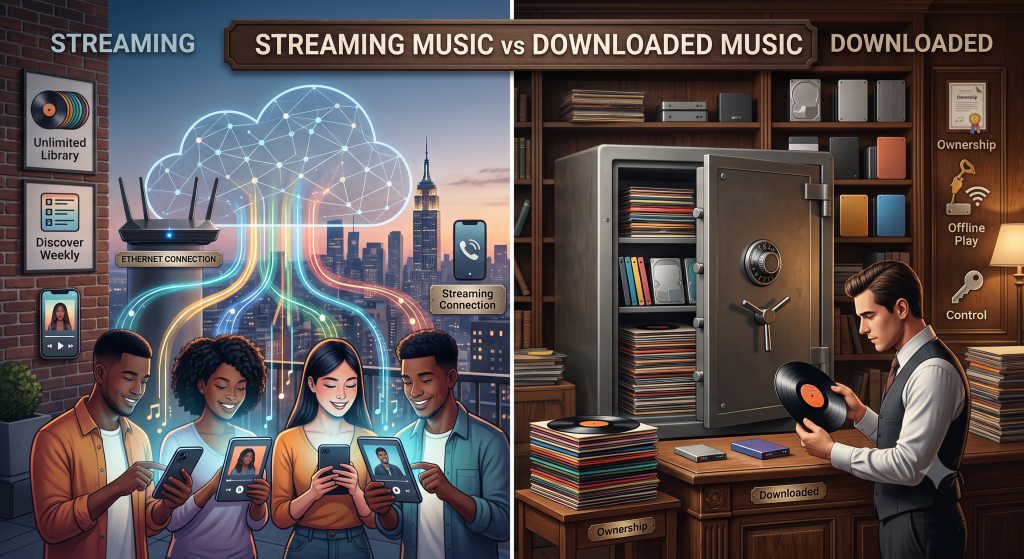
Streaming stations vs Music Packs in retail
Always-on specialty retail often prefers continuous streaming for simplicity. Stores with an existing media player or scheduled playout may prefer downloadable Music Packs. Compare models in that guide, then see current packs and streaming pricing. License terms: licensing · pack license.
Simple in-store signal chain
Dedicated playback device → amp or powered speakers → cleared commercial source. Keep cable runs tidy at the register island or back office rack. Hardware planning ideas: restaurant/venue setup guide (the same building blocks apply). No-app habits: play music without a consumer app.
Brand fit examples (illustrative)
- Apparel boutique — smooth contemporary / light groove, moderate vocals
- Home goods — warm acoustic or chill lounge beds
- Sports / outdoor — higher energy instrumental-leaning beds
- Beauty / wellness — soft ambient with gentle motion
These are mood targets, not prescriptions. The important part is that whatever you choose comes from a commercial provider matched to your location license.
Multi-door brands
One SyncPoint streaming subscription covers one physical location. Additional storefronts need additional licensing — do not share a single player URL across shops. If you are expanding, talk with us about the right footprint.
Bottom line
Build playlist moods on purpose, run them from a dedicated device, and use cleared commercial music. That is how retail sound supports merchandising without inviting unnecessary risk.
More reading: church ambient · Spotify legality · FAQ · Insights.
Seasonal refreshes without chaos
Holiday and sale seasons tempt managers to “just throw on something festive” from a personal account. Build seasonal changes into your commercial workflow instead: schedule a station change or swap a Music Pack ahead of time, brief the team, and revert after the event. That keeps brand control and avoids last-minute consumer logins.
Measure success by customer dwell and staff feedback, not by how novel the playlist feels to whoever opened that morning. A slightly familiar bed that supports browsing usually outperforms constant novelty.
- Approve seasonal changes one week ahead
- Keep a rollback station/pack ready
- Ban personal hotspots as the music network
- Log which location license covers each door
Need help matching energy to merchandising? Ask SyncPoint or compare streaming vs packs and setup basics.
Additional Source: Spotify for Business, Soundtrack